Tawny Owl
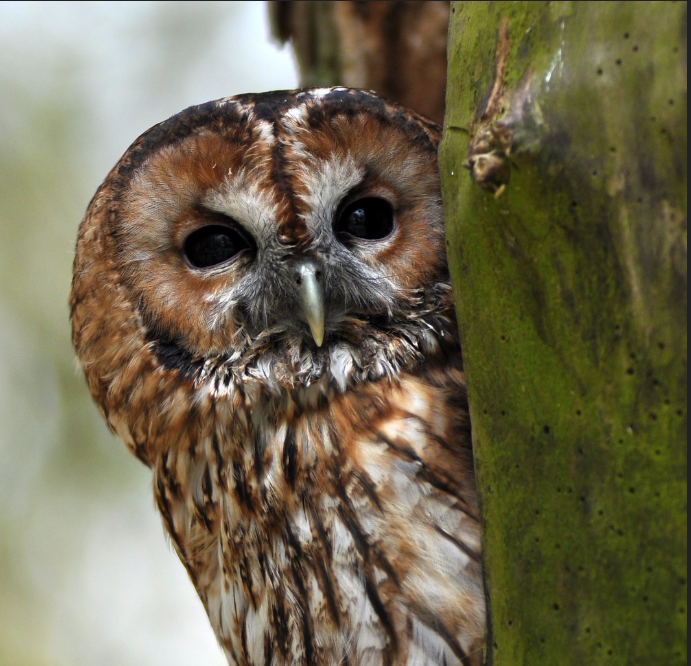
- The Tawny Owl is the most common Owl in The UK
- They are the ownly owl that makes the nocturnal 'twit twoo' call
- Young tawnies normally establish a territory by late autumn and are unlikely to leave their for the rest of their lives
- Tawnies have a range of territories often ranging between 12 and 20 hectares depending on the amount of suitable habitat available
- the typical life span is 4 years with breeding noramlly in the second year
- Females are often bigger and heavier than males
Habitat
Tawny Owls are often found in woodlands but have adapted to live in different environments like isolated trees, city parks, urban areas, sub-urban areas and even gardens. However most Tawnies are found in deciduous, broad leaved woodland

Diet
Diet comprises predominantly small mammals, namely Wood Mice (Apodemus sylvaticus) and Bank Voles (Myodes glareolus), but can also include Field Voles (Microtus agrestis) if areas of prey-rich grassland are available within the territory. In addition they will take rabbits, moles, small birds, beetles, earthworms, frogs and even fish. They have been recorded eating carrion in times of hardship.
Nesting
Tawny Owls will nest in a variety of places, but prefer tree cavities where available. However, in the absence of a suitable cavity they will use other natural sites including old crow or pigeon nests, squirrel drays, the forks of tree trunks, and even rabbit holes. They take readily to artificial sites such as purpose-built nestboxes. However, it’s highly unusual to find Tawny Owls roosting in a building and even rarer to find them nesting in one.
Only one clutch of eggs is laid, usually in the late winter or early spring. Tawny Owls are very early nesters with an average first egg date of 23rd March in the UK, although they can lay several weeks earlier than this if conditions are favourable, or later. Hatching early June has been recorded. Clutch size is typically 2-3 eggs, laid asynchronously every 2 days or so, and incubation lasts for approximately 30 days. Fledging occurs around 5 weeks of age, although young Tawny Owls tend to leave the nest earlier than this during their ‘branching’ phase. Still dependent on their parents for food for up to 3 months after leaving the nest, they will sit around on the branches of nearby trees and beg for food once darkness falls. If you find a young owl on the ground it’s important to identify it as what you need to do will differ depending on the species. If it’s a young Tawny Owl, then it probably isn’t in trouble and doesn’t need rescuing. If it’s a young Barn Owl the advice is completely different and it almost certainly does need rescuing and putting back in its nest.